
The Great White Watcher
Updated: Jul 16
By midday Tuesday I felt the familiar pull to leave town and sleep outside. The destination arrived almost as quickly as the impulse itself: the Baker River. The timing seemed fortunate. A notice had been posted that, beginning the following week, the access road would close roughly eight miles before the place I usually camp and would remain closed until well after Labor Day. For the rest of the summer the country beyond the gate would belong only to those willing to walk. It struck me as a sensible arrangement. Wilderness occasionally deserves a season without easy visitors.
The Baker River lies in a broad national forest where a reservoir, impossibly green in the right light, stretches toward the river's mouth. It has become a reliable destination for dispersed campers. Most people who arrive here are respectful enough. They pitch a tent, build a careful fire, and leave little evidence they were ever there. Others seem determined to measure their vacation by the weight of what they abandon. Overflowing fire rings, broken camp furniture, beer cans flattened into the dirt, fresh scars where someone decided another tree needed trimming. Even places that appear timeless accumulate the habits of the people who pass through them.
Most campers never venture farther than the lakeshore pullouts. The road follows the water closely enough that nearly every turnout offers an inviting view. The reservoir is a deep emerald, almost unnaturally so, bordered by Douglas firs and cedars that rise straight from the steep banks. On a warm afternoon the little coves become natural swimming holes, shaded by trees that have somehow escaped both logger and reservoir.
The road itself tells an older story. Before the valley filled with water, these hills were logged, and the route was cut to haul out old-growth timber. The forest has been quietly repairing itself ever since. Above the shoreline stand scattered giants among maples and younger second-growth trees, reminders of what survived and what returned. Below them, the hillside falls abruptly to the water, as if the lake had simply appeared one day and persuaded the land to surrender. Few people continue to the road's end. They have already found what they came looking for.
I keep driving.
At the turnaround the maintained trail slips into the forest, but I rarely follow it. Instead I walk out across the wide gravel wash where the Baker River braids itself toward the lake. There are no numbered campsites, no picnic tables, no signs suggesting where to sleep. Only open gravel, clear water, and enough room to choose a place that feels, if only for a night, as though no one had ever occupied it before.
This time I wandered out into the broad river wash until I found a small island of trees, a strip of sand and gravel that somehow refused to surrender to the current. It felt less like an island than a pause in the river's long conversation with the mountains. Its foundation had been laid decades, perhaps centuries, earlier. Long before dams harnessed the rivers downstream, several enormous trees had toppled into the channel and become lodged here. Time had done what time always does. Their trunks, half buried in gravel and bleached by countless seasons, had slowly become nurse logs, surrendering themselves to the cedars and hemlocks now growing from their decaying bodies. Only fragments of the old giants remained visible, a broad curve of weathered trunk, a shattered root ball clawing toward the sky. Judging by what little remained, I guessed they had been western red cedars. Around here, that is usually a safe bet. Even in death, they were still holding the landscape together.

Tucked beneath their descendants was a nearly perfect campsite. Someone had built a modest fire ring from smooth river stones, and a patch of level ground sat beneath the cedars as though it had always been intended for a tent. Beyond it, the view opened across the braided river bed toward the surrounding peaks. It was one of those places that asked very little of you beyond noticing it.
I never worried about flooding. The kind of water that rearranges a valley arrives in the colder months, when atmospheric rivers spill across the Cascades and every creek becomes intent on reminding people who truly shapes the landscape. We had several of those storms this past winter. Culverts plugged, forest roads disappeared beneath torrents, and sections of this very road were damaged badly enough that the Forest Service decided to close it later this summer.
The river has rewritten this valley before. A few years ago it abandoned its old channel altogether and carved a new one directly through the road, forcing engineers to relocate the route nearly a quarter mile farther into the forest. Out here, maps have a shorter lifespan than rivers.
But it was summer now. The river was clear and predictable, the days long, and the nights comfortably cool. My immediate concerns were far less dramatic: mosquitoes with an endless appetite, the occasional black bear wandering lower than expected, and a cougar known to patrol these woods.
I couldn't fault the cougar for that. I was the visitor. She belonged here long before I arrived, and long after I packed up my tent, she would still be making her quiet rounds through the cedars.
The Mountains Are Calling, and I Must Answer
If someone asked me to describe my spiritual practice, I would probably say it falls somewhere between Zen Buddhism and naturalism. John Muir once wrote:
"The sun shines not on us but in us. The rivers flow not past, but through us, thrilling, tingling, vibrating every fiber and cell of the substance of our bodies, making them glide and sing. The trees wave and the flowers bloom in our bodies as well as our souls, and every bird song, wind song, and tremendous storm song of the rocks in the heart of the mountains is our song, our very own, and sings our love."
Whenever I read those words, I recognize something familiar. Places like this have become sacred to me. Where a Christian might enter a quiet church or a cathedral and feel closer to God, I come to river valleys and mountain forests. My rituals are simpler. I feel the wind move through the cedars, run my hands across cold stone, listen to the birds arguing somewhere high in the canopy, and allow myself to become quiet enough to notice where I end and the landscape begins.

The doctrines are different, but the instinct is much the same. Nearly every faith has some form of ritual that asks us to pause, acknowledge our place in the world, and remember that we are part of something larger than ourselves. Whether I have stopped for only a few minutes or intend to spend the night, I always begin the same way. I stand still.
Some would call it giving thanks. Others might call it prayer. I think of it simply as remembering my scale. Standing in places like this, it is impossible not to recognize how small I am. Not insignificant, small. A single life occupying a brief moment in a landscape that has measured time in floods, glaciers, and forests instead of calendars.
If I happen to be carrying tea, coffee, or a little whiskey, I pour a small amount onto the ground before taking my first drink. It is not an offering to a god or to some spirit inhabiting the woods. It is a gesture toward my own intentions. It reminds me that I have entered this place as a guest, and guests should arrive with generosity. If I approach the landscape as I would an old friend with respect, curiosity, and the understanding that I am here to learn rather than possess; then it almost always has something to teach me.
Most of the places I return to have moving water nearby, and water has become part of the ritual as well. Sometimes it is nothing more than dipping a hand into the current, taking a long drink, and splashing cold water across my face until whatever noise I carried with me begins to settle. Other times I rinse my hair. Occasionally, if the weather and my timing agree with one another, I strip off my clothes and immerse myself completely. Calling it a baptism feels too religious, but I cannot think of a better word for the feeling of leaving the water lighter than when I entered it.

That afternoon I wandered down to the river's newly carved bank and found a shallow back eddy where a scatter of rounded stones had created a small, sheltered pool. The current slipped quietly past, leaving behind water the color of polished emerald glass.
I stripped down and eased into it.
The sun had warmed the river stones until they held just enough heat to be comfortable without burning bare feet. The water, fresh from the snowfields high above, wrapped itself around my legs with a coolness that felt earned rather than shocking. I stood knee-deep for a minute, letting the cloud of disturbed silt drift away. It brushed softly against my skin, almost like velvet being drawn through the water. I had never noticed that before. When the pool cleared, I took a few more steps until I found a submerged boulder deep enough to sit on. The water reached my armpits, and the river became perfectly still around me.
A Pile Of Rocks I Call My Dear Friend
I usually find myself speaking to Koma Kulshan as though greeting an old companion. Koma Kulshan is the Indigenous name for Mount Baker, meaning “the Great White Watcher”. It is the mountain tattooed along my left side, the mountain I grew up seeing from home, the one I can still draw from memory. It has always been the landmark I searched for on the horizon when I wanted to know where I was. Years ago, I stood on its summit. Most days I simply look toward it.
Of course, the mountain knows nothing about me. It is a volcano draped in snow and ice, utterly indifferent to my existence. That, strangely enough, is part of the comfort.
It has watched every season of my life without judgment. It has never expected me to become more than I am, nor less. It asks nothing of me except that I notice it is there. I catch myself calling it "she" or "he" from time to time, though even that feels inaccurate. Mountains have no need for gender. They are simply themselves. Perhaps that is why I keep returning. There is something deeply reassuring about a companion whose only lesson is to remain exactly what it has always been.
Facing north, I couldn't quite see Koma Kulshan. A shoulder of the hillside hid the mountain from view. Instead, I looked up the valley toward Mount Shuksan. Shuksan lives in the shadow of its larger neighbor. It lacks the dramatic profile of an active volcano and rarely receives the same attention, yet it is one of the most photographed mountains in Washington. There is something fitting about that. Some landscapes do not need to dominate the horizon to become unforgettable.
As I washed my hair, I found myself speaking to both mountains. I spoke about my search for kindness; for a way of living that feels genuine instead of performative. I spoke of gratitude for the opportunities I have been given to keep learning, even when the lessons arrived wrapped in hardship. I admitted that I was proud of my resilience while quietly resenting the life that required me to develop it. I spoke of solitude, of how difficult it still is to embrace, and how I continue trying to transform loneliness into something closer to peace.
I even spoke about my struggle with the ‘campfire theory of relationships’: that some people are meant only to share the warmth of a single evening before continuing on their separate paths. There are days I believe it completely. There are other days when I wish it weren't true.
I knew, of course, that I was talking to mountains. Or, more accurately, to enormous piles of volcanic rock that possessed neither ears nor opinions.
Even so, when I had finished speaking, I thanked them for listening.
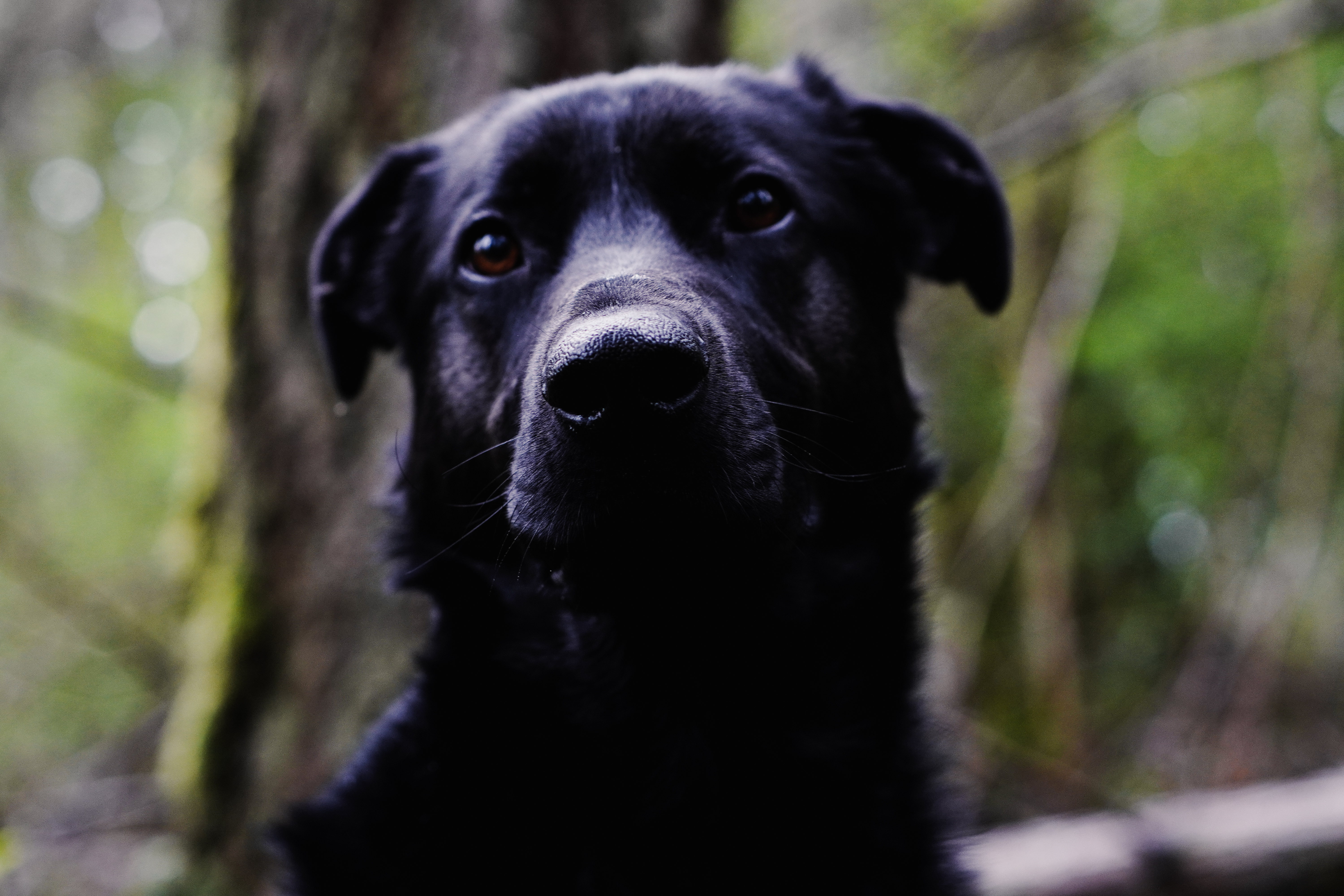
Back at the river's edge, I dried off on the warm stones while Rally wandered through the gravel bar, nose buried beneath the roots of an overturned cedar in pursuit of some fascinating scent. A hummingbird appeared without warning and hovered no more than a foot from my face. It regarded me with the sort of fearless curiosity only hummingbirds seem capable of, suspended effortlessly in the air before darting away toward a cluster of blooming fireweed farther down the bank.
For a brief moment, I wondered whether John Muir had been right, whether perhaps the flowers really do bloom within us.

We made our way back across the river wash toward our little island, stopping occasionally to pick blackcaps and trailing blackberry along the trail. The Fourth of July crowds had already disappeared, but they had left behind one unexpected gift: plenty of dry driftwood scattered along the gravel bars. It caught fire easily.
While my coffee came to a boil, I unpacked a small watercolor kit and painted a simple landscape: snow-covered mountains beyond a meadow of wildflowers. It was hardly a masterpiece.
As I watched the paint dry, I wondered what would become of it. Perhaps someday I would give it away. Not because of its artistic merit, but because it had been made here, beside this river, with water drawn from the mountains themselves, while my mind was occupied by gratitude instead of obligation.
Can a painting carry that with it?
Can someone else feel a little of the place where it was created?
I don't know.
Sometime later, sitting quietly beside the fire, I found myself saying thank you once more.
The mountains, as expected, offered no reply.
Or perhaps they did.
The answer wasn't words. It was the silence itself.
It doesn't matter whether a mountain is capable of friendship.
It doesn't matter whether the river heard my gratitude.
What matters is the person I become by treating them as though they deserve it.
What matters is my intention.
What matters is how I choose to show up, for this place, for others, and, perhaps most importantly, for myself.
BOOK: Love of Life - Jack London Currently reading while on this trip, picked this book up last year when I visited Jack Londons' home in California. I have long been a lover of him as an author, but when I went there I learned more about his wife and what a powerful character and inspirational person she was.
SONG: Where My Wild Things Are
This song hit a few years ago for me driving across the country up into the mountains to camp one night. The lyrics just smacked me in the face so hard that day. I was being asked why I had to go away on my trips those weekends, why I had to get away, I simply said "I have to". It wasn't enough to say that. This song felt like it said why in a way. It spoke of memories that I couldn't remember that lived 'out there'. I had to go be with them.
Thank you for reading my post. This post/essay, like many of the ones I write, is a blend of my personal experiences, travel, memories, stories, and shared conversations. These solely represent myself and my opinions and thoughts. When it involves personal friends I have given them nicknames unless they have given explicit permission to use their given name. There are times that I am able to pull from what I wrote down in my journals at the time an event happened, others I am trying to recall memories that have been altered by brain injuries and a lifetime of simply living. I may not always get it right, so please forgive me for some unintentional variations.
I always welcome feedback and thoughts on my posts. Please feel free to send me an email or comment below.
Love from the road,
Nic & Rally


Comments