
Not Looking For Gentle Teachers
Updated: Aug 10
A gentle fog rolled through the trees, and cool dew clung to the grass against my skin. Somewhere out in the pass, I could hear the long, slow drone of a ferry horn echoing through the morning. The faint scent of salt air mingled with honeysuckle, cedar, and the deep, earthy smell of loam. It was the scent of a living forest—of worms, fungi, and countless insects quietly turning over the detritus beneath my back.
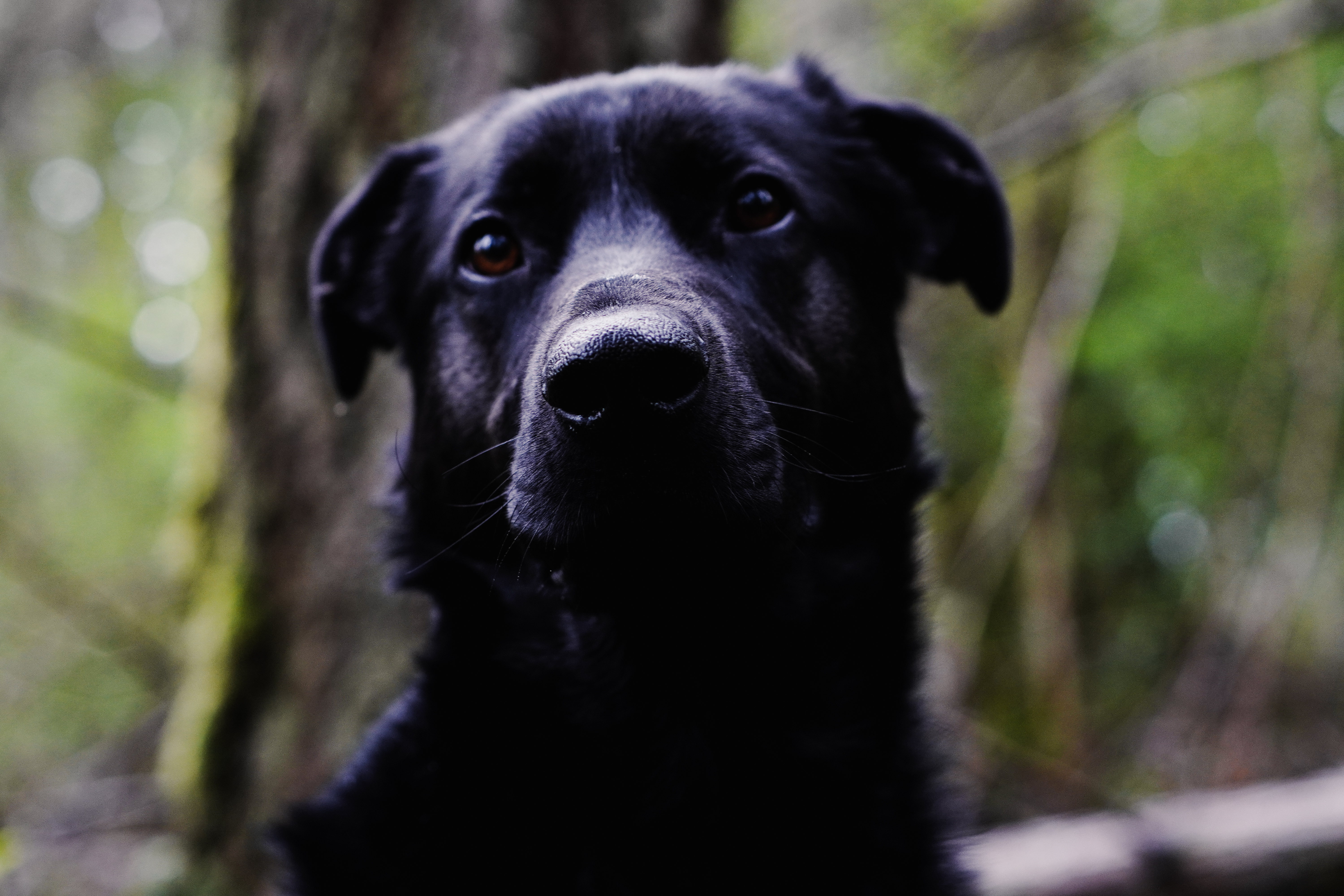
I lay stretched across my grandfather's grave, staring up at the sky while Rally investigated something along the edge of the cemetery. This little cemetery has been my family's final resting place since they first homesteaded the island. It is simple, without fanfare or unnecessary ceremony, and for me, it has always been a place of profound comfort. I've taken naps here, eaten lunches here, and spent long afternoons lying among the wildflowers and weeds, daydreaming about adventures that hadn't happened yet.
Eventually, I sat up and began peeling an orange. Rally wandered over and settled beside me.

As the peel curled away, the citrus oil burst into the cool morning air; sharp, bright, and somehow perfectly at home against the smell of damp earth.
To my left sat the small bronze plaque summarizing the breadth of my grandfather's life: his name, his service in both the Navy and the Air Force, the wars he fought in, the day he was born, and the day he died.
It hardly seemed enough.
Those few lines could never measure the man I knew as the closest thing I ever had to a father. They couldn't capture the son he had been to the two people buried just above him, the husband he was to my grandmother, who is still very much alive, the father he became, the friend others remember, or the countless versions of him that existed in the lives he touched.
The grandfather who lives in my memory is almost certainly different from the grandfather everyone else remembers. That is the strange thing about grief. We don't mourn the same person. We each mourn our own version of them.
Mine was the man I idolized. And who, in return, absolutely doted on me.
The Day I Began Building the Myth of the Man
August 15, 1999.
It was a Sunday morning. Mid-morning, but not especially early.
I was in my little cabin at the bottom of my grandparents' property. My grandfather had been dying for nearly a year. The cancer, brought on after a lifetime of smoking and hard living, had finally reached the point where everyone knew there wasn't much time left. My grandmother had gone to church. My mom was up at the house making breakfast. I was lying in the top bunk, listening to the waves gently lap against the beach below the cabin, my mind wandering somewhere I can't remember now.
The night before, I'd been filling pages of my journal with what I thought were profound thoughts about respect. A week earlier, my grandfather and I had argued. To this day, it remains one of my greatest regrets. I was sixteen. Stubborn. Certain that I understood the world better than I actually did. Like most sixteen-year-olds.

The argument had started because I was trying to explain something I believed deeply: that every person deserves a basic level of respect simply because they are human. Everything beyond that can be earned. That isn't what came out of my mouth. Likewise, what I thought I heard my grandfather saying wasn't what he was actually trying to tell me. In my teenage certainty, I convinced myself he believed respect had to be earned from the very beginning—that no one deserved it freely.
I remember thinking he was cold.
Hard.
Maybe even cruel.
Looking back now, I realize I wasn't arguing with my grandfather nearly as much as I was arguing with my own inability to communicate. That night, I filled pages of my journal about the kind of person I hoped to become and the kind of partner I wanted someday, someone who treated people with kindness before judgment. Sixteen-year-old me thought it was incredibly profound.
Then I heard my mother scream.
I was out of the bunk before I fully understood what was happening. I ran up the hill to the house. My grandfather was sitting in his chair. His faithful dog, Spider, lay quietly beside him. My mom was holding one of his hands. I took the other. It was swollen from the edema, soft and unfamiliar in my own. He drew another breath. Then another. His jaw clenched. And then...
Nothing.
We called the church, and someone was able to reach my grandmother and the rest of the family. The next few hours have always felt strangely compressed in my memory. They happened quickly. Yet somehow they also feel blurry, as though time itself softened around the edges. His body remained in the chair, facing the living room window.
Meanwhile, the house filled with people. It wasn't a large house to begin with -perhaps six hundred square feet on the main floor- but before long it felt impossibly crowded.
The coroner was called. While we waited, the conversations turned to practical things. Should we place his favorite tools in his pockets? What clothes should he wear? Who still needed to be notified? At first glance, those conversations might sound trivial.
They weren't.
He had chosen to be cremated, and these small decisions became our final attempts to honor the things that made him who he was. His tools, his work, his habits, those were as much a part of his identity as the bones, muscles, and hands that had carried him through life.
As more people arrived, more voices filled the room. I found myself wanting to leave. Not because I wanted to escape. Because the man I knew was no longer there. His body remained in the chair, looking out the window. But my grandfather, the man who had taught me what integrity looked like, who had quietly shaped so much of the person I would become, had already gone. I caught my oldest cousin's eye. Neither of us needed to say anything. We both knew it was time. As I walked toward the door, I glanced back one last time. From where I stood, all I could see was the top of his head above the back of the chair.
It was the last time I would ever see him.

The next time I saw my grandfather, he fit inside a small urn. The man who had always seemed larger than life. The six-foot giant with hands that felt twice the size of mine, whose very presence demanded that I become just a little fiercer to hold my own in the world, had been reduced to something not much larger than a Starbucks Venti cup.
It is a strange thing to reconcile.
He also taught me how to share an ice cream cone with my dog. He taught me that hard work and play were never meant to exist without one another. We'd spend the day clearing brush or cutting firewood, and then roast marshmallows over the very fire we'd created. He taught me how to sharpen a lawnmower blade, work with leather, maintain a public water system, and use a slingshot well enough to hit a rat in the chicken coop from twenty yards away. In other words, he taught me many of the things a grandfather probably should teach a child…
...and quite a few things he probably shouldn't.
There is no avoiding the fact that my grandfather belonged to a generation with much more traditional ideas about what boys and girls were supposed to become.
And yet, when it came to me, something softened.
My mother has pointed out more than once that the grandfather I knew was not the same man who had raised her. He never seemed particularly concerned with whether I wore dresses. He never insisted my place was in the kitchen. Instead, he simply invited me into whatever he happened to be doing. Sometimes that meant handing me tools. Sometimes it meant letting me wander beside him while he worked.
Looking back, I wish I had paid more attention. As a child, I wanted to swim, climb trees, chase frogs, and run barefoot through the woods. Sitting still long enough to learn mechanical skills wasn't high on my list of priorities.
School wasn't much easier. I managed to stumble my way through by doing remarkably well on exams while struggling with almost everything about the traditional classroom itself. Today we'd probably say my learning style wasn't particularly compatible with the way I was being taught.
As an adult, I understand it differently. I have dyslexia. I almost certainly have other forms of neurodivergence as well. Reading stories came easily enough, but numbers seemed to rearrange themselves before my eyes. Mathematics became something I quietly convinced myself wasn't meant for people like me. A few teachers who weren't equipped to recognize the problem only reinforced that belief. Without realizing it, I began turning away from anything that looked mechanical, mathematical, or engineering-focused.
Meanwhile, my grandfather kept doing what he had always done. He kept building. Fixing. Making. And I wasn't ready to learn from him. At least, not in the ways I thought mattered. Years later, many of his old tools found their way into my garage. Some of them I still couldn't identify by name. Others I barely knew how to use. But I treasured every one of them.
It took me a long time to realize why.
The greatest thing my grandfather ever taught me wasn't how to swing a hammer or repair a lawnmower. He taught me what to look for in a teacher. Not someone who is endlessly patient. Not someone who makes everything easy. Someone who is genuinely engaged. Someone who treats your curiosity with respect. Everything I've learned since has been shaped by that lesson.
I'm not looking for gentle teachers. I'm looking for respectful ones.
Collecting My 'Old-Men'
For years, there has been a running joke among my friends-and especially my past partners- that I have a habit of collecting old men. Not romantically. Mentally. Spiritually. Professionally.
My life seems to accumulate older men who quietly become mentors. They're the people I call when I'm trying to figure something out. The people whose advice I trust. The people who have somehow adopted me along the way. The funny thing is that, despite having wildly different backgrounds and personalities, they all have one thing in common. Every one of them has taught me something. More importantly, every one of them has taught me in the same way.
None of them have ever made me feel foolish for asking a question I thought I should already know the answer to. They are patient without being patronizing. Respectful without being indulgent. They genuinely want to pass along what they know. Looking back, I realize that's what I've been searching for all these years. In each of them, I recognize pieces of my grandfather. Or perhaps they're the pieces I never had enough time to discover before he was gone.
Maybe I've spent years quietly finishing a story that ended too soon.
One of those men is Wolfman. He's an artist who creates incredible work from fabric, though I suspect he's a musician at heart. We've known each other for more than fifteen years, and every time we meet, we hug. Not normal hugs. Legendary hugs. The kind that make everyone standing nearby profoundly uncomfortable. I'll happily stand there holding onto Wolfman while conversations happen around us, people come and go, and the rest of the world continues without us. I've worked beside him many times over the years. We may only see one another once or twice annually, but I know, without question, that if I showed up unannounced at his home, he'd point me toward the spare bedroom before asking why I was there. Sometimes he'll call just to tell me about fishing in the Sierra Nevada. Sometimes he'll ramble about whatever has captured his curiosity that week.
A custom piece of his artwork hangs in my bedroom. It's one of the first things I see every morning.
Another mentor is Squirrel. His mind operates at roughly ten thousand miles an hour. He gets distracted constantly. He's also somehow managed to turn that distraction into a superpower. Working with him is exhilarating. He's nearly thirty years older than I am, yet he's the person I call to ask about 3D printers, CNC routers, artificial intelligence, or whatever new technology has caught my attention. His curiosity has never slowed with age. If anything, it has accelerated. At the same time, he's an extraordinary cabinetmaker. The cherry-and-maple butcher-block island in my kitchen was built by his hands. Every morning I rest my coffee cup on it. Every evening I run my hand across the wood.
It's amazing how often we touch the people who taught us, even when they aren't standing beside us anymore.
Then there's Chuckles. When I first moved from a desk job into field inspections at the refinery, I knew almost nothing. Welding. Metallurgy. Mechanical systems. Pressure equipment. It all felt like a foreign language. Chuckles was the most experienced inspector in the department. For reasons I still don't fully understand, he decided I was worth investing in. Sometimes he taught directly. Other times he simply invited me to watch. If he was reviewing welding procedures, he'd pull up another chair. If he was headed into the refinery, I'd trail along behind him like an eager puppy, watching not just what he looked at, but how he looked at it. Looking back, I don't remember every lesson Chuckles taught me. I remember how it felt to learn from him. And perhaps that's the lesson that mattered most.
Some mornings I would arrive at work-Chuckles was always there before me, and I was almost always the second person in-and find a small piece of corroded pipe sitting on my desk.
No note. No explanation. Just a challenge.
My job was to study it, figure out what had happened, and then walk into Chuckles' office ready to defend my answer. Sometimes the damage mechanisms were obvious. Other times I stared at that little piece of steel as though it had been written in another language.
Eventually I'd wander into his office, pipe in hand. Sometimes I was right. Sometimes I wasn't. Not once, not a single time, did he make me feel foolish for getting the answer wrong. I never felt embarrassed to admit I didn't know something. Instead, I felt supported. Safe enough to stay curious.
Looking back, that may have been the greatest gift he gave me. He taught me that not knowing wasn't a weakness. It was simply the beginning of learning.
When the pandemic arrived, nearly everyone in our department was sent home. Only one other junior inspector and I remained on site. Chuckles had every reason to stay home. Instead, he quietly found reasons to keep showing up. Officially, he probably wasn't supposed to. Unofficially, he wasn't about to leave two inexperienced inspectors to figure everything out alone.
A year or so after he retired, I accepted the fully remote position I have now, working primarily in data analysis. We still meet for coffee from time to time. I still send him postcards from my travels. Sometimes, when I'm working through a difficult problem, I can almost picture myself back in the chair outside his office, staring at a weld coupon while he quietly filled out paperwork behind me, patiently waiting for me to think my way through the answer.
Not a Damsel in Distress
Lately, I've been searching for someone to teach me how to work on my own motorcycles. YouTube has been helpful. But videos can only teach so much. Nothing replaces standing beside another human being while they hand you a wrench, explain why it matters, and answer the dozens of questions that inevitably follow. Because that's the problem. I don't just want to know how to replace a spark plug. I want to know why it's designed that way. What every surrounding part does. How all of it works together. One question always seems to lead to ten more. My curiosity doesn't arrive in neat, manageable portions. It spills out everywhere.
I've had a few people my own age try to teach me. More often than not, those questions become an inconvenience. A distraction. Something to move past so we can hurry up and finish the job. Every time it happens, something inside me aches. Because I know exactly what would have happened if I'd asked those same questions when I was nine years old and my grandfather was working on his old Datsun. He would have stopped. He would have smiled. And he would have answered every single one. I just wasn't interested then. I wanted to be barefoot in the woods. I wanted to swim. I wanted to chase frogs and climb trees.
I wasn't ready.
Now I am.
Now I find myself standing in the garage with the curiosity of a nine-year-old little girl...
...and the broken heart of a forty-three-year-old woman who realizes the teacher she needed most is no longer there to answer the questions she's finally ready to ask.
Earlier this week I reached out to a friend who happens to be a mechanic. We'll call him Meow-chanic. I wanted him to help me figure out whether the bearing in the rear wheel of my DR-Z400 was actually beginning to fail or whether I was simply hearing things that weren't there. From the first time I met Meow-chanic and the mechanic he works alongside, I knew these guys were different.
They're about my age, and while there's plenty of playful banter in the shop, there is also something I've learned to recognize almost immediately. Respect. Every motorcycle garage I'd walked into before meeting them had somehow made me feel like I was in the way—as though I had wandered into a place where I didn't belong. Their shop felt different. It felt like coming home.
I was fairly certain the bearing was worn out, but I couldn't tell whether I was feeling grit from dust or the bearing itself beginning to fail. I'd read countless forum posts and watched videos explaining what I was supposed to feel. The words made sense. The sensation didn't.
I drafted a text. Deleted it. Rewrote it. Deleted it again. Finally, I hit send and waited, wondering if I was about to bother someone with yet another stupid question. I wasn't. Meow-chanic replied almost immediately. "Bring it by." When I arrived, he didn't simply tell me the answer. He handed me the wheel. He showed me exactly what to feel. He explained why it felt that way.
Later this week, when the replacement parts arrive, he'll lend me the proper tools so I can replace the bearing myself. That simple gesture means more to me than I know how to explain. Because that's the part I haven't mentioned yet. None of the people who have become my teachers have ever taken away my opportunity to fail.
They don't do the work for me. They hand me the tools. They answer my questions. They stand nearby if I need them. Then they let me figure it out. There is an incredible amount of respect wrapped up in that kind of teaching.
I'm not a damsel in distress.
I'm just a dyslexic darling with a complicated relationship with numbers.
It has taken me years to understand that when my grandfather died in the summer of 1999, I didn't just lose my grandfather. I lost the first great teacher of my life. Ever since then, I've been quietly finding pieces of him in other people. I also know that memory has turned him into something of a myth. Every passing year sands away another rough edge. The difficult moments fade. The arguments soften. The imperfections disappear.
What's left is something closer to a story than a man.
His memory has become a little like the bronze plaque that marks his grave.
Short.
Simple.
Unable to contain the full breadth of a life.
And maybe that's okay. Because the older I get, the less I find my grandfather in my memories of him.
I find him in Wolfman.
In Squirrel.
In Chuckles.
In Meow-chanic.
In every patient teacher who has ever handed me a tool instead of taking it from my hands. Perhaps that's how the best teachers live on. Not because we remember everything they taught us. But because, years later, we find ourselves teaching someone else the way they once taught us.
BOOK: The Dog Who Wouldn't Be - Farley Mowat Just a book about a special dog and growing up on the Canadian Prairies. A lot of the Farley Mowat books were in my grandparents home, so I remember reading these as a kid. Dogs were always a part of my life as a child, and I can't see my grandfather without a dog in the memory as well.
SONG: Everybody's Free to Wear Sunscreen - Baz Luhrmann
This song..... damn.... I remember it coming out then. Funny how I still listen to this song now and it continues to have meaning and grow in that meaning.
If you would like to find out more behind the scenes go check out my substack post about the Cabin
Thank you for reading my post. This post/essay, like many of the ones I write, is a blend of my personal experiences, travel, memories, stories, and shared conversations. These solely represent myself and my opinions and thoughts. When it involves personal friends I have given them nicknames unless they have given explicit permission to use their given name. There are times that I am able to pull from what I wrote down in my journals at the time an event happened, others I am trying to recall memories that have been altered by brain injuries and a lifetime of simply living. I may not always get it right, so please forgive me for some unintentional variations.
I always welcome feedback and thoughts on my posts. Please feel free to send me an email or comment below.
Love from the road,
Nic & Rally


Comments