
Confluence of Streams - A Study in Fear and Risk - Part 2
Updated: Jun 30

Fear has a way of returning when you least expect it.
When I wrote Part 1, it would have been easy to leave the discussion there, as if fear were something I had already figured out. We like to believe that growth is a straight line that each lesson learned is permanent and every challenge conquered stays conquered. But that hasn't been my experience. Fear doesn't disappear simply because we get older or wiser. It changes shape. It finds new places to live.
Over the years, I've come to see fear as a barometer for the rest of my life. When fear begins showing up more often, it is usually telling me something important. Maybe I am avoiding a difficult conversation. Maybe I am holding too tightly to control. Maybe I am standing on the edge of something meaningful and uncertain. Whatever the reason, fear is rarely the problem itself. More often, it is the indicator light on the dashboard, warning me to pay attention.

In casual conversation, I often use the words risk and fear interchangeably. I know they are not the same thing, but there is enough overlap between them that the distinction can sometimes feel blurry. To me, they are closely related forces. Risk is objective. It is the measurable part of uncertainty. It is the data, the probabilities, the pros and cons that can be analyzed and evaluated. Risk allows me to draw upon experience, gather information, and make calculated decisions.
Fear is something different. Fear is visceral. It lives deeper in the body than in the mind. It is emotional, primal, and subjective. It appears when certainty disappears. It emerges from the loss of control and the presence of the unknown. While risk asks, "What are the chances?" fear asks, "What if I can't handle what comes next?"
Many people describe risk and fear as two sides of the same coin. I have always thought of them as two currents flowing through the same river. There are times when one current is stronger than the other. Sometimes the analytical current dominates, and everything feels predictable and manageable. Other times the emotional current swells into rapids, chaotic and overwhelming, pulling us in directions we never intended to go.
The place where I feel most grounded is at the confluence of those currents. It is where analysis and emotion meet, where neither one overwhelms the other. There is an ebb and flow between them—a balance that allows me to move forward without becoming either reckless or paralyzed.
My professional life has largely been an exercise in navigating risk. Every day I evaluate probabilities, consequences, and uncertainties. My personal life, however, has been an exercise in navigating fear. One asks me to trust data. The other asks me to trust myself.
To quote Alanis Morissette, “isn’t it ironic” that I am a Risk-based Analyst for my day job?

Let's start with the analytical side of the river.
My job is, in many ways, the study of risk. I analyze process streams carrying everything from hydrocarbons to corrosive chemicals. I review thickness measurements taken over years, calculate corrosion rates, evaluate damage mechanisms, and assess the effectiveness of inspection programs. Then, using those calculations, industry standards, and experience, I help determine whether equipment can continue operating safely.
That is the simplified version, anyway. To this day, I still struggle to explain what I do to people outside the industry.
For nearly a decade, however, I wasn't sitting behind a desk analyzing data. I was the one physically climbing through the equipment. It wasn't a career I ever planned on having. Like many things in life, I found it more by accident than intention. Back then, a routine day might involve climbing a tower hundreds of feet into the air, walking pipe racks suspended above operating units, or inspecting every inch of a storage tank. Most of the time I was working alone. Often I was wearing a respirator or supplemental breathing equipment. The work demanded technical competence, but it also required a certain comfort with discomfort.
Every spring and fall, refineries enter what are known as turnarounds. Entire process units are shut down so repairs can be made, equipment can be cleaned, catalysts replaced, and inspections completed. For an inspector, turnaround season means confined spaces.
Lots of confined spaces.
Pressure vessels that normally operate under extreme temperatures and pressures are emptied, cleaned, and opened for inspection. My job was to suit up in layers of protective equipment, climb inside, and search for the smallest signs of corrosion, cracking, distortion, or damage. Sometimes the defects we were looking for measured in fractions of an inch. Missing one could have consequences years later.
This is where the two currents in the river collide.
Before entering a vessel, every risk is analyzed. The permits are reviewed. The atmosphere is tested. The lockout procedures are verified. Rescue plans are established. There is an attendant outside whose sole responsibility is monitoring the people inside. Every hazard that can be identified is discussed and mitigated. From a risk perspective, everything is under control. And yet, every time I crawled through the manway, fear came with me.
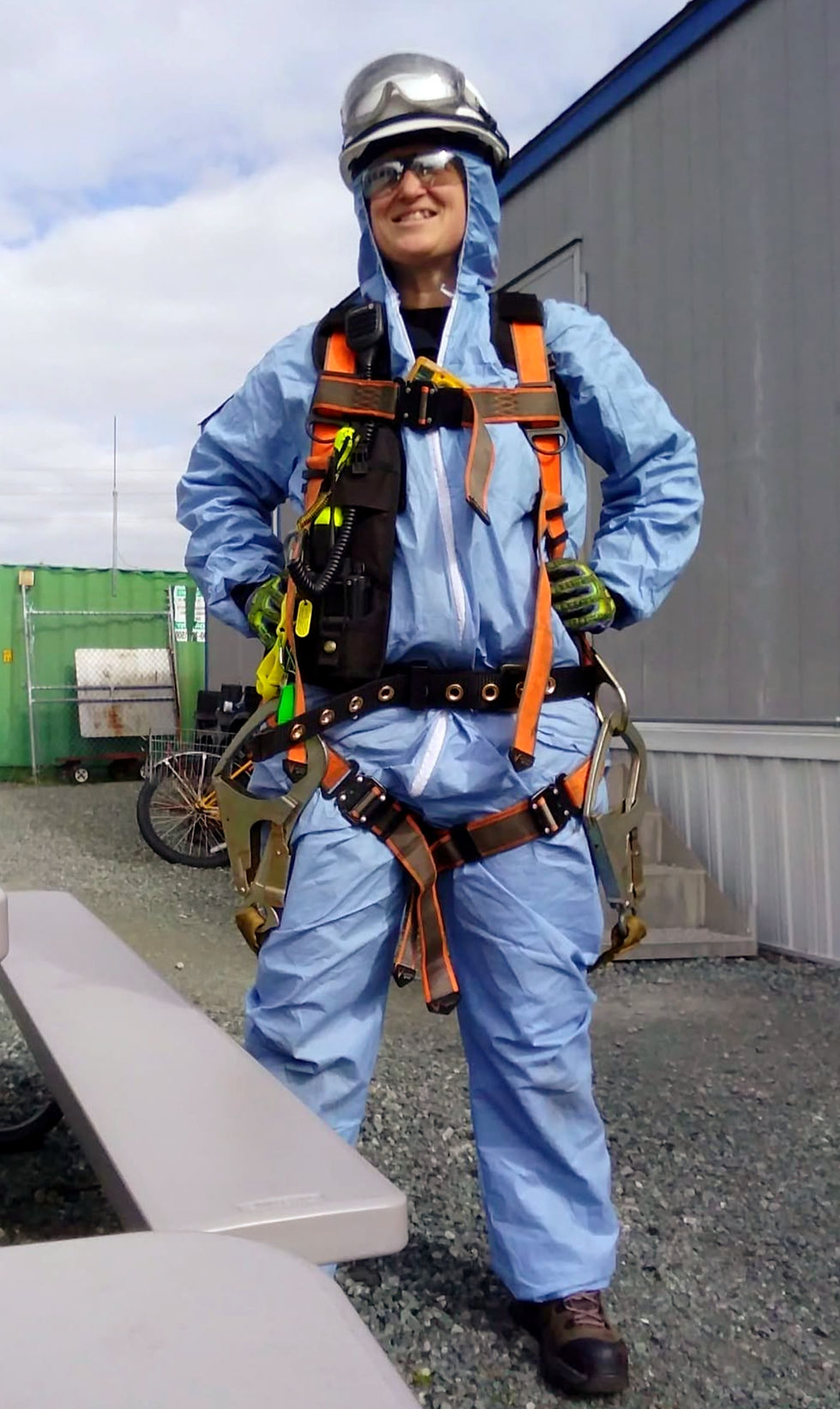
What my safety attendant didn't know was that I am claustrophobic. Not mildly uncomfortable in tight spaces. Genuinely claustrophobic. I struggle to sleep in a sleeping bag because I dislike feeling restricted.
The vessel in front of me has an opening only eighteen inches wide. There are three of us going inside. The vessel itself is roughly ten feet long, four feet tall, and shaped like an oversized capsule. Internal structures crisscross the interior, forcing us to crawl over, under, and around them. If something goes wrong, only one person can fit through the opening at a time.
I know the numbers.
I know the permits.
I know the procedures.
But fear does not care about any of that.
The respirator strapped to my face amplifies every sensation. The vessel feels smaller than it is. The walls feel closer than they are. My brain begins calculating impossible scenarios that logic has already dismissed.
We estimate the inspection will take thirty minutes. Thirty minutes spent crawling over steel internals, documenting every square inch, taking measurements, photographs, and notes. I try to focus on the work. Measure the pit. Record the depth. Mark the location. Move to the next indication.
Stay with the task.
Stay with the facts.
But fear keeps whispering in the background:
"You don't have enough air."
"You're stuck."
"You can't get out quickly."
Because of the vessel's dimensions, I spend most of the inspection folded onto my knees, bent forward like a child in prayer, my face inches from the steel. My breath rebounds inside the respirator and the moisture collects inside the mask, nearly waterboarding me on each inhale. The lenses fog. Every exhale seems to leave less room in the vessel. The four-gas monitor clipped to my gear flashes periodically as it samples the atmosphere. I know exactly what the readings mean. I know the oxygen levels are un-acceptable. It is why I am in a SCBA.
The analytical side of my brain understands all of this. The fearful side is convinced I am running out of air. That is the strange thing about fear. It doesn't require ignorance. It can sit comfortably beside knowledge. Sometimes the person who understands the risks best is still the one fighting the hardest battle inside their own head. I have to keep reminding myself to lean into my work.
“No shit. Breathe….. Water boarding myself, don’t cough.
My air is supplied......
Mark this gouge as mechanical not corrosion based at the 6 o’clock position 2ft from manway. North wall.
Shit that's the manway, why is it dark, is the safety standing in front of it? Where is the safety, are they even paying attention?
Frack what time is it. How long have I been in here.
Gouge is 3” long and ½” wide, no other markings, no pitting noted. Clean edges.
Crap, my leg is stuck against that internal, did it cut through? I don’t think they fully cleaned this vessel, what's this stuff on the bottom, is this acid, white stuff …no.. maybe, is this…CRAP ..was this cleaner, grit blaster, product, or something else. What was in this vessel, will this kill me, or will this just eat through my bones and kill me later like cancer? Oh god, I can’t breathe.
Note corrosion at the welds of the inlet nozzles on the top, recommend NDE, potential repair/replace. Will need secondary inspection. Phew. Okay. Shift. Next 6” band.”
Fear is my silent conductor in the orchestra pit

In 2015, I stepped onto a roller derby track at a large convention in Las Vegas. There were thousands of spectators in attendance, and I was skating with a deaf and hard-of-hearing team against another all-star roster from around the country. Five minutes into the game, a skater on the opposing team delivered an illegal shoulder check directly to my face.
My nose broke instantly.
What I didn't know at the time was that I had also fractured the orbital bones around my eyes and my cheeks. The damage was extensive enough that it would eventually require surgery, not only to restore my breathing, but also to address a developing hematoma in my cheekbone that could have led to more serious complications.
By that point in my life, surgery wasn't exactly unfamiliar territory.
Over the years, I had accumulated quite the collection of injuries and procedures. Nine surgeries in total. Broken bones, torn ligaments, damaged cartilage, and countless repairs to various parts of my body. After the first few, the process became almost routine.
The only part I never really liked was the anesthesia.
Not because I was afraid of it, but because I disliked the absence of time.
Sleep has a rhythm to it. You drift off, you dream, and you wake with some awareness that hours have passed. Anesthesia feels different. One moment you're awake, the next moment you're somewhere else entirely, with no sense of the journey between the two. Still, it had never been enough to bother me.
But I digress.
I attended the consultations. I spoke with the surgeons. I sought second opinions and even met with a plastic surgeon. My mother attended medical school when I was eight years old, and I spent so much of my childhood around hospitals, clinics, and physicians that there is a certain familiarity to the cold efficiency of medicine.
I knew how to advocate for myself.
I knew how to ask questions.
I knew how to navigate the paperwork, insurance hurdles, and financial traps that often accompany healthcare.
Everything appeared straightforward.
The surgeons were highly qualified. Broken noses are surprisingly common. Luck would have it I was getting a complimentary rhinoplasty upgrade out of the deal. They would reshape my nose so my glasses fit better, improve my breathing, and potentially reduce some snoring while they were at it. There would be no visible scarring, and the entire procedure would take place in an outpatient surgical center.
By every rational measure, this was an easy day.
And yet something felt wrong.
The night before surgery, I couldn't sleep.
Part of that was practical. My breathing was so restricted that I had to sleep upright and breathe through my mouth. But another part of me was trying to solve a different problem: What exactly was I afraid of?
Sometime around three in the morning, lying awake in the dark, I finally figured it out.
During one of the consultations, the surgeon had explained part of the procedure. To reduce the hematoma and prevent complications from the healing process, he would need to reshape portions of the damaged orbital bone. The explanation was far more technical than that, but one detail had lodged itself firmly in my brain.
There would be a rotary surgical tool grinding bone near my eye socket.
Near my brain.
The realization hit me differently than any surgery I had undergone before.
Knees, shoulders, ankles, arms; those all felt external somehow. Important, certainly, but external. This felt different. This was happening inches from my eyes, my thoughts, my memories, my sense of self. It felt uncomfortably close to whatever part of me I considered "me."
For the first time in a long time, I was genuinely scared.
I was scared that night.
I was scared the next morning.
I was scared while signing the final paperwork.
And I was still scared when they placed the anesthesia mask over my face and asked me to start counting backward.
What is interesting to me now is that I never voiced any of this.
I didn't tell the surgeon.
I didn't tell the nurse.
Not because I thought they would dismiss me, but because I didn't need reassurance. I wasn't looking for someone to tell me everything would be okay.
I already knew the statistics.
I trusted the surgeons.
I believed the procedure would be successful.
I simply felt afraid.
And, in a strange way, I think I needed to be.
Some situations deserve our fear.
Sharp power tools operating inches from your brain should probably make you uncomfortable. If that thought doesn't unsettle you at least a little, take a moment and sit with it.
Even now, years later, writing these words causes me to shift in my chair.
The surgery itself was flawless. No complications. No lasting issues. Nothing that would make me question the skill of the medical team. But the thought of that procedure still makes my pulse quicken. In fact, as I write this, my smartwatch just vibrated to inform me that my heart rate has spiked.

The pure emotional current that is just carrying me downstream as I age.
Something I have been working to be more open about is my hearing loss. It is part of the reason I receive disability compensation from the Department of Veterans Affairs. When I was first tested, I didn't think it was that significant. One ear was worse than the other, but it seemed manageable. Talking about it more openly over the years has helped remove some of the self-imposed stigma surrounding it.
Still, there are moments when it feels utterly helpless.

I remember when the reality of it finally hit me. Not only was my hearing not improving, but I was losing pieces of the world around me without even realizing it. The strange thing is that my brain had been trying to save me.
As human beings, we spend our entire lives learning patterns. When there are gaps in information, our minds naturally fill them in. We do it when we read. We do it when we listen. We do it in conversations. We take the fragments we receive and use experience to complete the picture. My brain had become exceptionally good at doing that.
When I missed pieces of a conversation, my mind would reach into its catalog of memories and experiences and fill in the missing words. Most of the time, I never even noticed it happening. The problem was that I wasn't just dealing with hearing loss. Around the same time, I was beginning to understand that I was also living with an undiagnosed brain injury. Sometimes the wiring got crossed. Sometimes the patterns didn't quite connect the way they should. Sometimes my brain filled in the wrong thing. A friend or loved one would tell me something, and I might only hear sixty or seventy percent of what they actually said. My mind would construct the rest. On good days, it was surprisingly accurate. On bad days, it wasn't.
The difficult part was that I couldn't always tell the difference.
When I looked back on a conversation days later, I couldn't remember whether it had been a good hearing day or a bad hearing day. I couldn't tell whether the memory I carried was what someone had actually said or what my brain had constructed as the gaps presented themselves.
And then one day, the weight of that realization landed all at once.
I understood that I would never again hear the people I loved exactly as they intended to be heard.
Even if their communication was perfect.
Even if they chose their words carefully.
Even if they sat directly across from me.
There would always be a gap somewhere between what was said and what I received.
The fear extended beyond people.
What other parts of the world was I missing?
Could I still hear birds singing in the morning, or was my memory supplying sounds that no longer reached me?
Could I hear the crunch of snow beneath my boots?
Could I hear my cat purring from across the room?
And if I ever had a child, would I hear their heartbeat?
I know I could feel it. But would I hear them cry out for me, could I hear them sing?
Hearing aids can help amplify sound. Technology can compensate for some of what has been lost. But amplification is only part of the problem. Ironically, with amplification of sound, the wires can get even more crossed, and I find it harder to paint the picture clearly of what is actually being said. What my brain is interpreting is getting washed out by the noise.
The harder part is learning to live with the uncertainty.
It is the space between what was said and what I think was said.
It is the disconnect between reality and my interpretation of it.
To feel that separation growing over time is a fear unlike any of the others I have described. It is subtle, but it is enough that I notice it.
There is no surgery to schedule.
No vessel to climb out of.
No finish line where someone tells me the danger has passed.
There is only adaptation.
There is also hoping that the people around me will grow with grace and patience.
Over the years, I have tried to approach it intentionally. I pause more often. I ask follow-up questions. I seek clarification. I try to engage in conversations that reaffirm another person's truth rather than relying solely on the version my mind has assembled for me.
Most days, that is enough. For now.
But there are still moments when it catches me off guard.
Moments when I become overwhelmed.
Moments when I feel profoundly disconnected from the people around me.
Moments when I am genuinely scared.
Because the thing I have trusted most throughout my life—my own mind—is also the thing that sometimes betrays me.
Someday, I will have gray hair and enough years behind me that people will expect a certain amount of hearing loss. They will forgive missed words and repeated questions. Perhaps by then I will be so practiced at navigating it that I can help others who are facing it for the first time.
For now, however, it remains one of the most persistent fears I carry.
Not because it is dramatic.
Not because it is immediate.
But because it has no resolution.
It simply arrives each day and asks me to live with uncertainty.
In the next part of this series on fear I am going to tackle the hardest part, a bit more primal fear. I started writing it years ago, and then added some more after some recent feedback after part 1 was published. It is deeply personal and shares some rather traumatic moments, so I may pause to ground before publishing it and move to another subject for a bit. Interesting to note that I have some fear in that story being open public knowledge at the moment. I am ready to tell it, but the closing of the act is a big step for me.
BOOK: The Science of Fear - Daniel Gardner This book is more about how political and economic powers use fear to manipulate responses, but there is good insight into how the self and gut reactions to fear can trick the brain into reacting.
SONG: Human - The Killers
This song came to me about the time that I received my initial diagnosis regarding the brain injury, it just resonated. I would drive around that year singing it to just 'express emotion', I think it helped. I play it now and it just gives me a little hope. The opening lyrics just really hit home.
By the way, I did not tell anyone, my friends, my family or even my husband at the time of the diagnosis. I didn't start talking about it till years later.
Thank you for reading my post. This post/essay, like many of the ones I write, is a blend of my personal experiences, travel, memories, stories, and shared conversations. These solely represent myself and my opinions and thoughts. When it involves personal friends I have given them nicknames unless they have given explicit permission to use their given name. There are times that I am able to pull from what I wrote down in my journals at the time an event happened, others I am trying to recall memories that have been altered by brain injuries and a lifetime of simply living. I may not always get it right, so please forgive me for some unintentional variations.
I always welcome feedback and thoughts on my posts. Please feel free to send me an email or comment below.
Love from the road,
Nic & Rally


Comments